Skip to content

Hi there, I’m Hinell

01.About me

A student who was born in New York and is currently studying at Concordia International School Shanghai. I'm curious in spirit, sensitive in how I read people and animals, and outspoken when it matters.

I've been around animals for as long as I can remember. I started keeping fish before I turned five, and since then there have been tadpoles, birds, snakes, and a lot of other pretty unusual pets, plus two cats who run the house. Animals don't tell you what they need, so you learn to notice tiny things: a change in posture, a sound, a mood. Reading those quiet signals took a lot of patience, and it made me a more sensitive person. I still pick up on things that people don't say out loud.

Growing up between two cultures taught me the other half of the lesson. Sometimes nobody is going to guess what you mean, and that's when you have to speak up. Animals taught me how to listen, and moving between cultures taught me how to say what I think. I'm still working on balancing the two.

Beyond that, I like to try things. I play piano, clarinet, and a bunch of Chinese traditional instruments. I paint when I want to slow down, and I also have a habit of starting projects because I think "wouldn't it be fun if..." a little too often.

This site is where I share the things I care about, along with what each one taught me. Hope you enjoy looking around!

Scroll down
02.Engineering & Robotics

Nov. 2025 - Sep. 2026

Marine Bionics: A Low-Disturbance Undulating-Fin Underwater Robot

Influenced by my family, I’ve been deeply invested in marine life for as long as I can remember. Repeatedly watching documentation about ocean life and identifying fish species were my biggest, and also my favorite pastimes back to the time when I could barely read a full sentence. This experience has embedded a seed of curiosity in my mind. As I grew up, I developed my interest in engineering, while my wish of protecting the marine environment and lives started to sprout. One day, watching cuttlefish ripple their fins or flatworms glide along the seabed, I wondered why most underwater robots look and sound so different from the creatures they study.

That question became this project. Most underwater inspection robots use propellers, which are powerful but come with real problems: they're noisy enough to startle fish, they stir up sediment that clouds cameras and damages the seabed, and their spinning blades can injure nearby animals. I wanted to design a robot that could observe marine life without disturbing it.

Taking inspiration from the undulating side fins of cuttlefish and marine flatworms, I built a robot propelled by a wave-like motion along flexible silicone fins. I went through three prototypes. The first tested whether a linkage-based skeleton could work, and I discovered that printed parts were sticking together, which blocked smooth movement. The second added rocker arms to the linkage and confirmed that the fin motion was smooth and controllable. In the third, I added silicone fins, a camera, an LED light strip for defense, and an ESP32-based control system with a web interface for remote operation. In tank tests, the robot moved smoothly, located a small fish, and approached it without startling it, with far less water disturbance than a propeller.

Articulated linkage prototypes for the undulating-fin robot
Silicone fin detail mounted on the robot frame
Robot being tested in the water tank
testing
testing in water
Me with my robot model at the ICC competition venue
The project won second prize in the Shanghai district and third prize in the ICC China district. It also taught me how rewarding it is to combine biology and engineering to solve a real problem.

Apr. 2026 - Present

IGEM Project: Model Protein Expression for E. coli

During the second semester of my junior year, I joined our school’s 2026 IGEM team.

I came into iGEM dry lab knowing almost nothing about ODE modeling. I had little experience with mathematical modeling, and I ended up leading a team that was counting on me to produce something real. Most of what I know now, I learned from zero, in the middle of deadlines, while other people waited on my results.

It was not a smooth process. There were many nights when the model wouldn't behave, the simulation gave nonsense, or I couldn't tell whether the problem was my equations, my parameters, or my understanding. More than once I broke down because I couldn't get a result. Not getting results is a strange kind of pressure: the work is invisible, and you can spend a whole day and have nothing to show for it. I'm still in some of that pressure now.

With my iGEM team in our school lab
Posing with my iGEM team at the campus sculpture after heavy research sessions

But I'm grateful for it. This project tested two things at once: how far my academic ability could stretch, and how much stress I could carry without letting it stop me. I didn't expect to learn the second one, and it may turn out to be the most valuable. I now know that "I don't understand this yet" is a place I can work from, not a place I have to escape. Slowly, the equations that once felt like a wall started to feel like something I could talk to.

I'm still suffering a little, and I'm still learning. But I wouldn't trade this for an easier season.
03.Animal Science

Jun. 2025 - Jul. 2025

Cornell Summer Program: Sustainable Animal Science & Husbandry

In the summer of 2025, I attended Cornell University's summer program on animal science and sustainability in animal husbandry. It was my first academic summer camp, and it changed how I think about my interest in animals. Our professor focused on the practical management of livestock, horses, and poultry, and we spent much of our time at Cornell's sheep farm and other local farms, learning hands-on.

Two experiences stood out. At the sheep farm, we practiced lambing using a transparent box with a small opening, through which we guided sheep dolls as if assisting a real birth. Once we were comfortable, we practiced blindfolded to simulate the pressure and limited visibility of real conditions. We even simulated multiple births and difficult deliveries, which taught me how much patience, precision, and calm judgment animal care requires.

Sheep farm at Cornell
Hands-on husbandry practice with livestock
Field notes from the animal science program

The second was our visit to the veterinary school of Cornell, where we learned how laboratory animals are protected and raised, with a strong focus on animal welfare and scientific rigor. I came to understand how researchers and animals work together, and how ethical standards make that research possible.

horses
cows
the lab

I also led a group of three for our final presentation. We researched the poultry industry, examined the challenges it still faces, and proposed possible solutions. Leading the project taught me to turn what we had seen on farms into structured, evidence-based thinking, and to collaborate with others on a real problem.

Before this program, I knew animals mostly through observation and reading. I had never really considered how people systematically work with different species. By the end, I understood that animal science spans farms, clinics, and laboratories, each with its own responsibilities. My passion for animals now has a clear direction.

Jun. 2026 – Aug. 2026

Cornell Summer Program: Special Topics Animal Science

I signed up for this course expecting to learn about birds of prey: their habitats, diet, and reproduction. We covered all of that, but the real focus was how raptors and humans are connected. We studied the history of raptor training, how opinions about raptors have changed over time, and how human factors like habitat loss and collisions affect them today.

On Mondays and Wednesdays, we went to Cornell's raptor research and breeding facilities to observe the birds up close, prepare their food, and clean their living spaces. It was routine, humble work, but it showed me what caring for these animals really takes: patience and attention to detail.

At the end of the program, each of us was assigned a species and an individual bird at the Cornell Raptor Center. Mine was Esther, a thirty-year-old golden eagle. She was born with a wing defect that keeps her from ever flying, and she is blind in her left eye. Even so, she is living a good life. Because of safety concerns I didn't work closely with her, but her story taught me that the human-raptor relationship is also about responsibility. A bird like Esther could not survive in the wild, and she has lived three decades because people made that possible.

in class 1
in class 2
Esther, the golden eagle
Esther in closer look

For our final presentation, we spoke for about fifteen minutes while holding raptor-like dolls, simulating what it is like to present with a bird in front of the public. Speaking clearly, handling the bird, and reading the audience all at once was harder than I expected, and it gave me real respect for wildlife educators.

This course changed how I see raptors. They are not just impressive predators to admire from afar. Their futures depend largely on human choices.
04.Marine Biology

Jul. 2013 - Present

Mini Aquarium

More than ten years ago, my grandfather showed me how to take care of a goldfish. He taught me to watch the water, to feed lightly, and to notice when something was wrong. When he moved back to his hometown, I kept going on my own. I started with goldfish, then moved on to marine fish, jellyfish, bettas, turtles, and snakes, though fish have always been my main focus.

goldfish
turtle
the tank

Many people see fish as decorations that don't deserve the care we give dogs or cats. My experience has convinced me of the opposite: fish need more care, not less, because they can't tell you what's wrong. Their whole world is a few liters of water, and keeping that world balanced is delicate. Early on I learned that more effort isn't always better. If you change water too often in your eagerness to keep it clean, you can disrupt the water chemistry and the bacterial balance, and that harms the fish. Good husbandry takes patience, sharp observation, and the judgment to know when to stop.

That lesson was tested when one of my fish developed severe dropsy, probably from a bacterial infection. Fluid swelled its abdomen until its scales stood out on both sides like a pinecone. My water tests were normal, so I isolated the fish and disinfected its original tank. I tried metronidazole and a diuretic at reduced doses, but after three to five days of observation there was no improvement.

Running out of options, I decided to try a risky last resort: draining the fluid myself. Without anesthesia, speed was everything, and I was working alone. I sterilized a syringe with alcohol, laid a damp cloth over the fish's head and body, leaving only the abdomen exposed, and drew out the fluid. Afterward I disinfected the site with iodine. Over two weeks I repeated this three times. The fish improved noticeably, and after a month of recovery I returned it to its original tank.

the sick goldfish
taking care of my goldfish
draining the fluid
I now understand that this was a gamble, and I would first seek advice from an aquatic veterinarian if I could. But the experience taught me how to make decisions under uncertainty, how to stay calm while handling a living animal, and how much I still have to learn. It's why I want to study marine biology formally: I want to move from intuition and improvisation to real knowledge of how aquatic animals live, get sick, and heal.
05.Pioneer and Oncology Research

Nov. 2024 - Aug. 2026

Pioneer Academics: Nanobiotechnology & DNA Origami

In my Pioneer research, I designed a DNA-origami "shield" to stop antibody-drug conjugates from releasing their toxic payload too early in the bloodstream. My design was a four-helix DNA bundle closed by protease-cleavable locks, and I wrote a full paper proposing two in vitro experiments to test it, including the FRET diagrams that illustrate them, which I made myself. The topic combined oncology, biochemistry, and nanotechnology, and I had to teach myself much of it from scratch. It was also my first formal research paper, so I was learning academic structure, citation, and argumentation while keeping up with my other coursework.


The process was not smooth. The difficulty of the topic and the pressure of the academic workload made every stage harder, and there were times when I had to rethink my approach entirely. Scheduling was one of my biggest challenges, and when I fell behind, I did not wait for the problem to grow. I communicated often with my PCA to adjust my timeline and stay on track, and I worked with my professor, Professor Nathan Derr, to refine my ideas and strengthen the paper. I also broke the project into weekly milestones and set aside regular blocks of time for reading and drafting, treating each obstacle as a problem to solve.

The project showed me how much my writing ability, my growing subject knowledge, my time management, and my ability to work under stress could accomplish together.

Nov. 2024 - Sep. 2025

Group Research: Novel Multi-Agent Framework for Oncological Clinical Trials

I also have similar experience from an oncology research project, where I worked on the coding side:

06.Clubs & Community Services

I joined the National Honor Society and the Chinese Honor Society in April of my junior year. Both are membership-based, so the main work was earning my place.

NHS looks at the whole student rather than grades alone. Admission required a strong academic record, GPA > 3.6, along with demonstrated service, leadership, and character. Meeting all four meant that my volunteering and responsibilities outside the classroom had to be consistent, not just a line added at the end. CHS had its own standards: high proficiency in Chinese, excellent academic performance in Chinese literature courses. For me, that reflected years of studying a language that connects me to my heritage.

Beyond meetings, my most active role came at Lunar New Year, when each club presents its work to the school. I was responsible for the CHS display, gathering and arranging pieces that members had brought or created. Seeing students stop to look at calligraphy and artworks made the culture feel shared and not just studied.

These memberships are less about what I did each week and more about what they recognize: commitment to learning, to service, and to a language and culture I care about.

07.Freediving

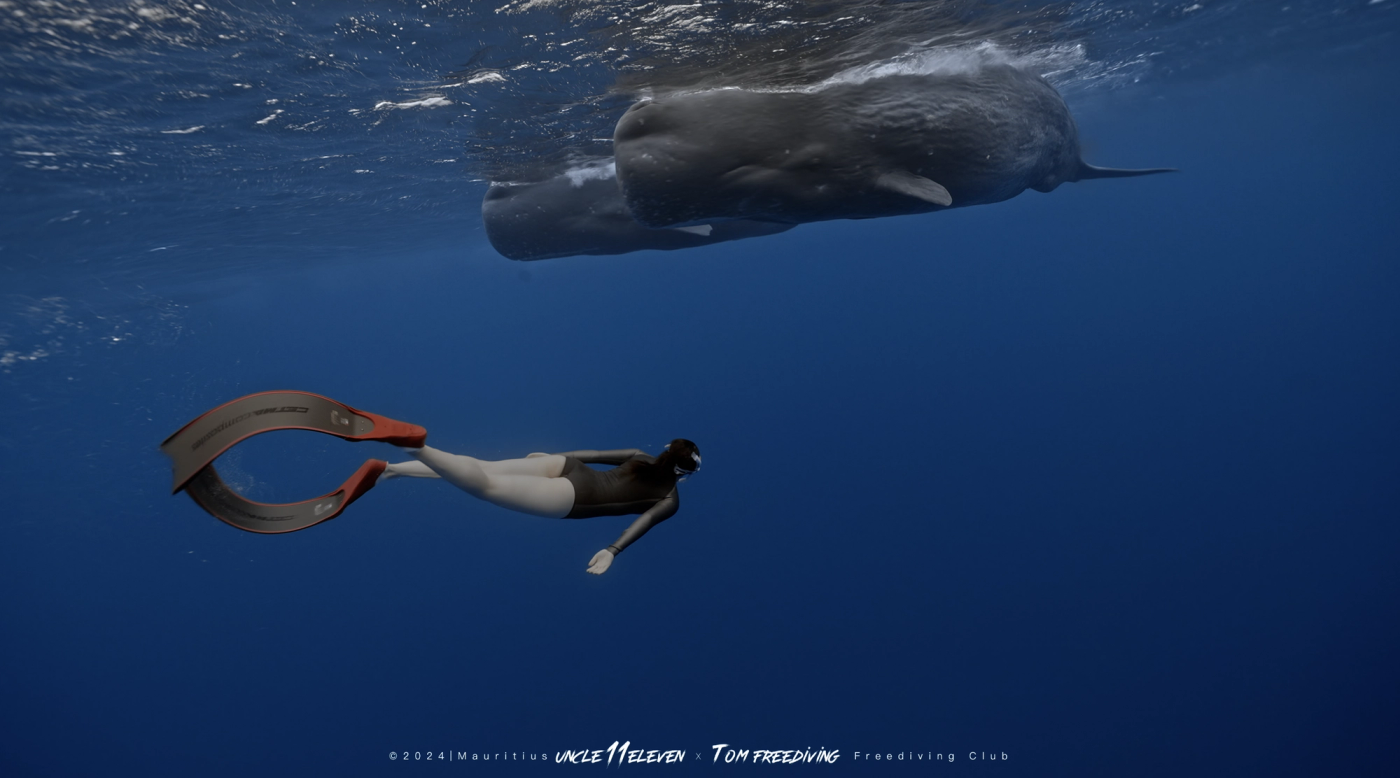
I never thought of myself as a sporty person. I started freediving because I love marine biology, and I hoped it would let me observe the ocean on its own terms. But freediving turned out to be the sport I feel most connected to.

It is hard in two ways. Your body has to learn to work with very little oxygen, and your mind has to face its own resistance. The urge to breathe tempts you toward the surface the whole time, and learning to stay calm through that urge is the real training. The sport also favors experience, so most of my dive buddies are much older than I am, and in group sessions I'm usually the youngest. Still, I can say with some pride that I have a natural aptitude for it. Holding my breath, equalizing my ears, and overcoming the instinctive fear came more easily to me than I expected. In training, I help my buddies where I can. We come from different places and backgrounds, but we share one thing: we love the ocean more than anything.

My first whale chase was in Mauritius. When I put my face in the water and looked down, the sea was so deep that all I could see was blue abyss, and out of it a pod of sperm whales was coming straight toward me. I had prepared myself mentally, but accepting that scene was still hard. Each time I dove, I thought of a line I carry with me, "courage is the hymn of humanity," and then I went under.

Chasing whales is exhausting. I paddled and pushed against the water so often that my gel nails split into layers. Once, as I surfaced, a sperm whale's tail nearly swept me away. Those days tested my courage and my ability to stay calm when things go wrong.

08.Music

Jul. 2024 – Present

Concordia Band Performance & Clarinet

I have played first clarinet in Concordia's Concert Band since my sophomore year, and in my senior year I moved up to Wind Ensemble. Every year we prepare three concerts: Christmas, New Year, and Spring. Each one starts the same way, with a first rehearsal where we have to go over so much. The balance is off. The brass covers the woodwinds, the melody gets buried, and a section that sounds fine alone disappears inside the whole. Nothing is wrong with any single player, but together it does not work yet.

Fixing that taught me to listen before I play. In one rehearsal, our conductor stopped us mid-phrase and asked the clarinets to play softer. I was confused, because I was playing every note correctly. Then he had us listen to the flutes, who carried the melody at that moment, and play again. This time I stopped trying to be heard and started trying to blend. The phrase came together, and the melody I had been covering finally came through. My part was no less important, but in that moment its job was to support.

Concert Band performing on stage
Concert Band performing on stage 2

That lesson stayed with me when we performed "Nature of Tree" for over 200 people, and when I was one of ten Concordia students chosen to play at the Kerry Parkside Music Festival alongside students from other Shanghai schools. In those moments the music was not mine. It belonged to all of us, and my job was to make my part serve the whole.

Jun. 2015 – Present

Piano Training and Performances

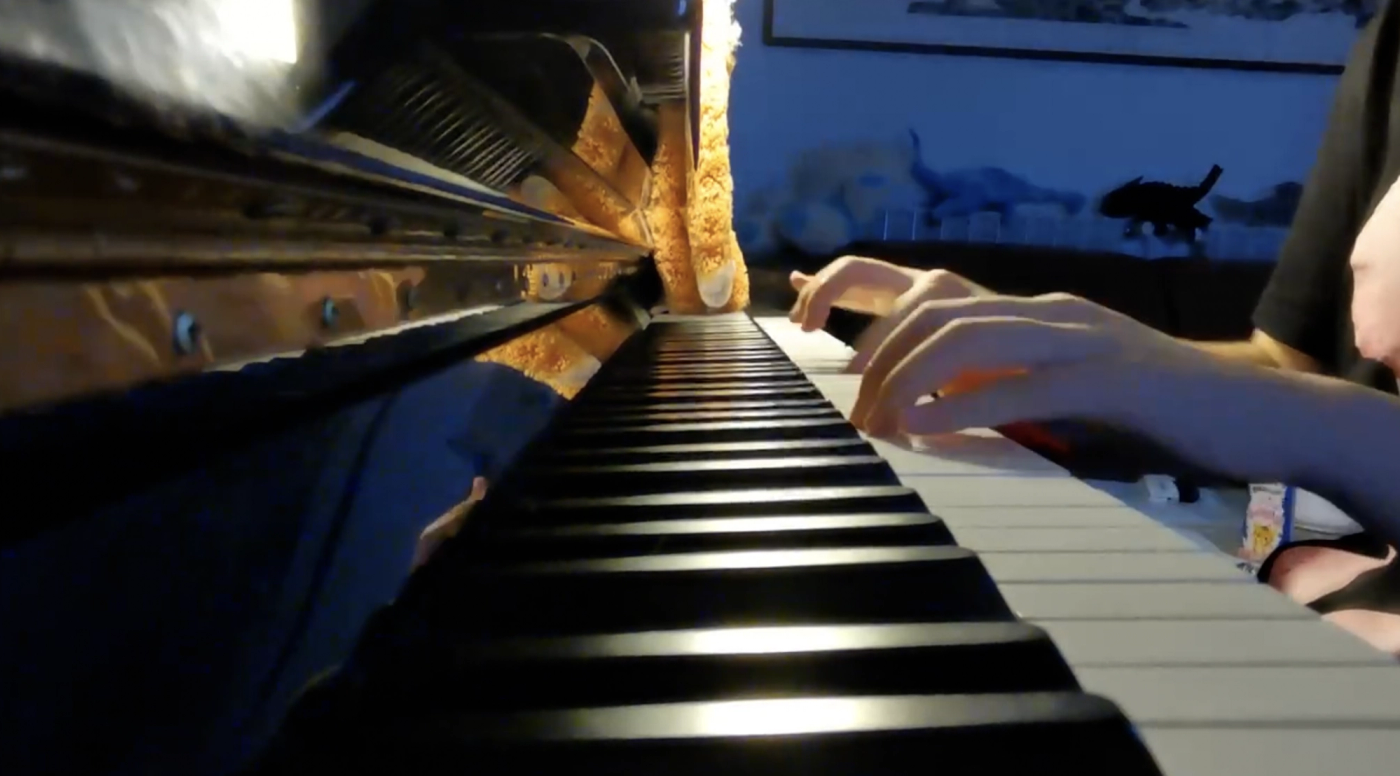
Every pianist knows the feeling of a wrong note. What I remember is what comes after it: going back to the same few bars, playing them again, and getting them wrong again. And again. Sometimes the third or fourth attempt felt worse than the first, and I would sit there with my hands on the keys, wondering what the point was if my fingers still would not listen.

Those were the moments I came closest to giving up. But I always did one thing: I played it once more. Not because I believed this time would be perfect, but because stopping would mean the mistake had won. Slowly I noticed that the bars that had refused me for a week were suddenly easy, and I could not tell you which repetition had changed it.

09.Art

Art is where I can be completely myself.

There is no score to follow and no one else's part to fit into. A blank page asks only one thing of me: what do I want to say?

I have studied at the Xuebi Hong Art Studio since I was eight, and over nine years I have made more than twenty original works in watercolor, acrylic, graphite, oil, and sculpture. Whatever the medium, I can put what I feel into it. Some days that is calm and some days it is restless, and the work always shows it.

But freedom alone does not make a good piece. Art taught me patience. A drawing cannot be rushed, and the parts I wanted to finish quickly were always the parts that looked unfinished. I learned to slow down, look again, and keep working until the piece felt right.

When one of my works was displayed in a regional exhibition, I realized that my quiet hours at the studio had become something other people could see. Freedom gives me something to say, and patience lets me say it well.